- Scuola di inglese
- Corsi
- Student zone
-
E-Shop
- Bambini
- Corsi individuali bambini
- Corsi di gruppo bambini
- Ragazzi
- Corsi individuali ragazzi
- Corsi di gruppo ragazzi
- Adulti
- Corsi generali individuali
- Corsi generali di gruppo
- Linguaskill
- Corsi Linguaskill
- TKT
- Corsi individuali TKT
- Corsi di gruppo TKT
- Business
- Corsi individuali di business English
- Corsi di gruppo di business English
-
Prenota Cambridge
- Contatti
- Prenota esami Cambridge
- Gruppi scolastici
- Prezzi
- Informazioni su risultati e certificati
-
- The project
- ISP exam fees for schools
- How to join the project
- How to organise exams in your school
- Information for parents
- Support for teachers
- International recognition
- Preparation Centre V Authorized Centre - the difference
- Preparation Centre Logos
- Cambridge Apps, games and activities
- Cambridge English Penfriends
- Social media
- How to officially accept Cambridge English exams
- CELTA
- Linguaskill
- CPSQ/TSA
- Blog


BOROUGH MARKET
Data pubblicazione:
15/03/26
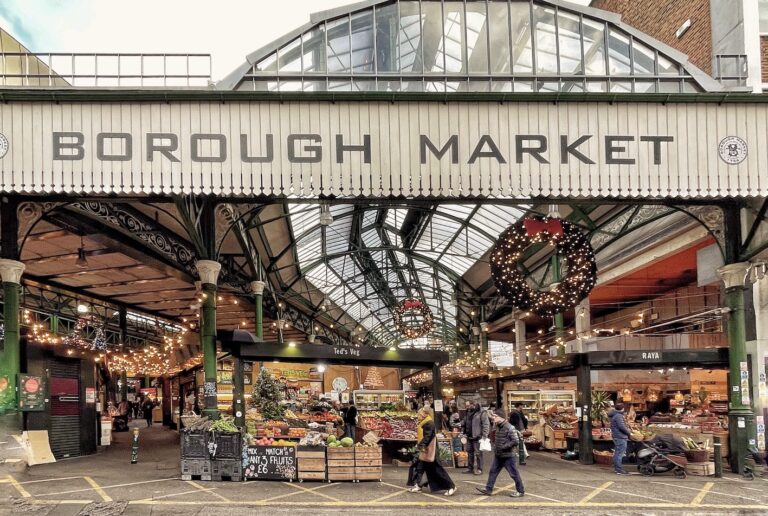
BOROUGH MARKET
Borough Market is one of the oldest and largest food markets not only in London, but the entire UK. It has been selling food to Londoners and in more modern times tourists for at least 1,000 years, and has been in it’s current location for over 250 years.
The market started in around 1014 and was originally located in Southwark, near the south end of London Bridge, which at the time was technically outside London’s walls. Around this time, records show that cattle, fish, vegetable and grain were the primary products being sold at the market. Due to it’s proximity to London Bridge, which was one of the few places to cross the River Thames at the time, it attracted a lot of passing customers. The first official mention of a fruit and vegetable market is in 1276, when the market moved to the High Street.
During medieval times, Borough Market had become a chaotic place. By this point, the market had long been established as London’s primary place for food trading, and regularly attracted a huge number of vendors and sellers. It wasn’t unusual for livestock such as cows, sheep and chickens to be running amok in the streets where the market was situated. Overcrowding and congestion was such a problem that sellers on foot weren’t allowed to stand still and had to keep moving.
As the centuries passed, London and it’s population grew in size, and Borough Market’s location next to London Bridge was becoming ever more a problem due to the number of commuters crossing the bridge. In 1756, Parliament passed the Borough Market Act, which moved the market to it’s new and to this day current location, still in Southwark.
During Victorian times in the 19th Century, the market began to move with the times and was renovated with new buildings and a roof. In 1851, a new grand hall was opened, and its iron and glass structure was truly innovative for the time. Also with the opening of railway lines near the market, this meant transportation of food to the market became easier, and foods from further afield started to flood the market, giving Londoners more variety.
Moving into the 20th Century, the market even began to hold sporting events, and there was a cricket match between the fruiterers and the salesmen. While these events were put on hold with the outbreak of the First World War in 1914, they returned some years later and included general events such as races where contestants would carry baskets on their heads. Charlie Chaplin, who grew up in Southwark, helped to fund the events.
The rise of supermarkets in the second half of the 20th Century led to the popularity of Borough Market waning somewhat, but the market still continues to thrive to this day, albeit with perhaps a different clientele. In the past, greengrocers and small businesses would perhaps be Borough Market’s biggest providers of income, but that has now shifted more towards tourists, office workers and everyday customers and passers by.??Today, you can buy almost any food you want at Borough Market. While the more stalls selling more traditional products such as meat, fish, fruit and vegetables of course still exist, there are also countless stalls selling more artisan and specialist products, as well as foods from around the world. If you want paella, falafel or a Thai Curry, to give a few examples, it wouldn’t be a problem. However, with Borough Market firmly established as a London landmark and tourist attraction which is well aware of it’s place in London’s rich history, don’t be surprised if you find yourself paying high prices for certain products! Still, even if you simply fancy a wander around Borough Market purely out of curiosity and to take a step back in history, there aren’t many places in London that can offer such a typically London experience as Borough Market.
Author: Jake Robert Barnes
ENGLISH EXPRESS ITALY
Borough Market is one of the oldest and largest food markets not only in London, but the entire UK. It has been selling food to Londoners and in more modern times tourists for at least 1,000 years, and has been in it’s current location for over 250 years.
The market started in around 1014 and was originally located in Southwark, near the south end of London Bridge, which at the time was technically outside London’s walls. Around this time, records show that cattle, fish, vegetable and grain were the primary products being sold at the market. Due to it’s proximity to London Bridge, which was one of the few places to cross the River Thames at the time, it attracted a lot of passing customers. The first official mention of a fruit and vegetable market is in 1276, when the market moved to the High Street.
During medieval times, Borough Market had become a chaotic place. By this point, the market had long been established as London’s primary place for food trading, and regularly attracted a huge number of vendors and sellers. It wasn’t unusual for livestock such as cows, sheep and chickens to be running amok in the streets where the market was situated. Overcrowding and congestion was such a problem that sellers on foot weren’t allowed to stand still and had to keep moving.
As the centuries passed, London and it’s population grew in size, and Borough Market’s location next to London Bridge was becoming ever more a problem due to the number of commuters crossing the bridge. In 1756, Parliament passed the Borough Market Act, which moved the market to it’s new and to this day current location, still in Southwark.
During Victorian times in the 19th Century, the market began to move with the times and was renovated with new buildings and a roof. In 1851, a new grand hall was opened, and its iron and glass structure was truly innovative for the time. Also with the opening of railway lines near the market, this meant transportation of food to the market became easier, and foods from further afield started to flood the market, giving Londoners more variety.
Moving into the 20th Century, the market even began to hold sporting events, and there was a cricket match between the fruiterers and the salesmen. While these events were put on hold with the outbreak of the First World War in 1914, they returned some years later and included general events such as races where contestants would carry baskets on their heads. Charlie Chaplin, who grew up in Southwark, helped to fund the events.
The rise of supermarkets in the second half of the 20th Century led to the popularity of Borough Market waning somewhat, but the market still continues to thrive to this day, albeit with perhaps a different clientele. In the past, greengrocers and small businesses would perhaps be Borough Market’s biggest providers of income, but that has now shifted more towards tourists, office workers and everyday customers and passers by.??Today, you can buy almost any food you want at Borough Market. While the more stalls selling more traditional products such as meat, fish, fruit and vegetables of course still exist, there are also countless stalls selling more artisan and specialist products, as well as foods from around the world. If you want paella, falafel or a Thai Curry, to give a few examples, it wouldn’t be a problem. However, with Borough Market firmly established as a London landmark and tourist attraction which is well aware of it’s place in London’s rich history, don’t be surprised if you find yourself paying high prices for certain products! Still, even if you simply fancy a wander around Borough Market purely out of curiosity and to take a step back in history, there aren’t many places in London that can offer such a typically London experience as Borough Market.
Author: Jake Robert Barnes
ENGLISH EXPRESS ITALY
Hai domande?




I nostri social
LE ULTIME DAL NOSTRO INSTAGRAM
@englishexpress_cambridgeit997
ENTRA A FAR PARTE DELLA NOSTRA COMMUNITY
PER NON PERDERTI NESSUN AGGIORNAMENTO!