- Scuola di inglese
- Corsi
- Student zone
-
E-Shop
- Bambini
- Corsi individuali bambini
- Corsi di gruppo bambini
- Ragazzi
- Corsi individuali ragazzi
- Corsi di gruppo ragazzi
- Adulti
- Corsi generali individuali
- Corsi generali di gruppo
- Linguaskill
- Corsi Linguaskill
- TKT
- Corsi individuali TKT
- Corsi di gruppo TKT
- Business
- Corsi individuali di business English
- Corsi di gruppo di business English
-
Prenota Cambridge
- Contatti
- Prenota esami Cambridge
- Gruppi scolastici
- Prezzi
- Informazioni su risultati e certificati
-
- The project
- ISP exam fees for schools
- How to join the project
- How to organise exams in your school
- Information for parents
- Support for teachers
- International recognition
- Preparation Centre V Authorized Centre - the difference
- Preparation Centre Logos
- Cambridge Apps, games and activities
- Cambridge English Penfriends
- Social media
- How to officially accept Cambridge English exams
- CELTA
- Linguaskill
- CPSQ/TSA
- Blog


LONDON TAXIS
Data pubblicazione:
04/05/26
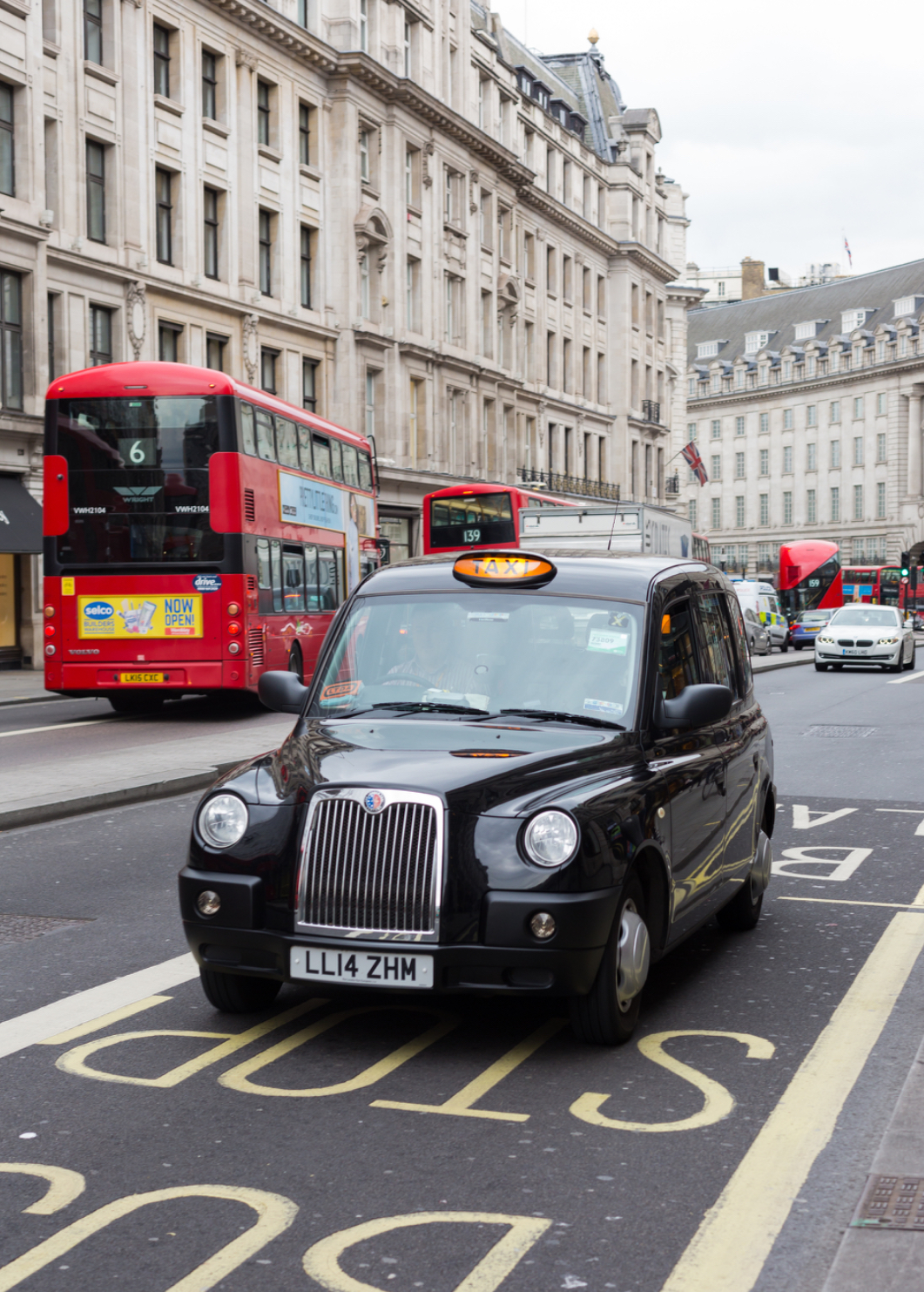
LONDON TAXIS
Like red phone boxes, double decker buses and Big Ben, London Taxis - otherwise known as Hackney Carriages or Black Cabs - are also an iconic sight in London, just as yellow taxis are in New York. While now they are of course cars, this hasn’t always been the case, as they have a long history dating back to the pre-car era.
Since the 1580s, private horse drawn coaches were used by the aristocracy, and within 50 years hackney coaches were regularly seen on the streets of London. By the 1620s, there were so many coaches for hire in the capital that they were becoming a danger to pedestrians, particularly in the narrower streets.
The first petrol powered taxis began to appear at the start of the 1900s, revolutionising the London taxi service, and shortly after metres were introduced to the taxis to more fairly and accurately calculate the fare. Cars were beginning to replace the traditional horse drawn carriages and by 1910, the number of motorised taxis outnumbered horse drawn carriages. By 1947, the last horse drawn carriage was taken out of service.
Before the Second World War, taxis around London were seen in a variety of different colours, but after the War they were a standard black, and in the 1970s the term ‘black cab’ became widely used to refer to London taxis. The colour and shape of London taxis makes them instantly recognisable all over the world.
To become a London taxi driver, you have to pass an exam called ‘The Knowledge’. This is an extremely difficult test. It is the world’s most demanding taxi exam, and the whole process typically takes three to four years to pass. Potential taxi drivers must demonstrate that they have an intimate knowledge of the entire street geography of London, buildings and landmarks. With The Knowledge, taxi drivers are required to immediately respond to a passenger’s request without looking at a map, satellite navigation, or asking for assistance or advice on the controller’s radio. The Knowledge as a test was started in 1865, and remains practically unchanged since. Not only does The Knowledge include tests of well known streets and landmarks, but also the names and order of side streets and traffic lights on the way to a destination, and to be aware of whether the route could potentially encounter traffic problems. London taxis are regulated by Transport For London, and there are at present around 20,000 black cab drivers in London.
From January 2017, Transport For London announced that all new black cabs should be zero-emissions capable. Today, 4 out of 5 black cabs are running with the cleanest fuels to respond to the demands of the modern city, and electric taxis have become increasingly more popular as they offer an ecological alternative and save drivers money. As the electric taxis can travel for approximately 300km on a full battery without having to recharge, this means that the cab drivers don’t have to stop regularly to fill the cab with petrol.
London black cabs continue to remain a vital and popular part of London transport. Be it just for getting from A to B, or tourists wanting to experience travelling in this truly unique London way. Also, as bookings are not required and it is possible to hail the next passing taxi, this makes it a very convenient and easy way to travel. Despite their long history, the popularity of London black cabs shows no sign of diminishing.
Like red phone boxes, double decker buses and Big Ben, London Taxis - otherwise known as Hackney Carriages or Black Cabs - are also an iconic sight in London, just as yellow taxis are in New York. While now they are of course cars, this hasn’t always been the case, as they have a long history dating back to the pre-car era.
Since the 1580s, private horse drawn coaches were used by the aristocracy, and within 50 years hackney coaches were regularly seen on the streets of London. By the 1620s, there were so many coaches for hire in the capital that they were becoming a danger to pedestrians, particularly in the narrower streets.
The first petrol powered taxis began to appear at the start of the 1900s, revolutionising the London taxi service, and shortly after metres were introduced to the taxis to more fairly and accurately calculate the fare. Cars were beginning to replace the traditional horse drawn carriages and by 1910, the number of motorised taxis outnumbered horse drawn carriages. By 1947, the last horse drawn carriage was taken out of service.
Before the Second World War, taxis around London were seen in a variety of different colours, but after the War they were a standard black, and in the 1970s the term ‘black cab’ became widely used to refer to London taxis. The colour and shape of London taxis makes them instantly recognisable all over the world.
To become a London taxi driver, you have to pass an exam called ‘The Knowledge’. This is an extremely difficult test. It is the world’s most demanding taxi exam, and the whole process typically takes three to four years to pass. Potential taxi drivers must demonstrate that they have an intimate knowledge of the entire street geography of London, buildings and landmarks. With The Knowledge, taxi drivers are required to immediately respond to a passenger’s request without looking at a map, satellite navigation, or asking for assistance or advice on the controller’s radio. The Knowledge as a test was started in 1865, and remains practically unchanged since. Not only does The Knowledge include tests of well known streets and landmarks, but also the names and order of side streets and traffic lights on the way to a destination, and to be aware of whether the route could potentially encounter traffic problems. London taxis are regulated by Transport For London, and there are at present around 20,000 black cab drivers in London.
From January 2017, Transport For London announced that all new black cabs should be zero-emissions capable. Today, 4 out of 5 black cabs are running with the cleanest fuels to respond to the demands of the modern city, and electric taxis have become increasingly more popular as they offer an ecological alternative and save drivers money. As the electric taxis can travel for approximately 300km on a full battery without having to recharge, this means that the cab drivers don’t have to stop regularly to fill the cab with petrol.
London black cabs continue to remain a vital and popular part of London transport. Be it just for getting from A to B, or tourists wanting to experience travelling in this truly unique London way. Also, as bookings are not required and it is possible to hail the next passing taxi, this makes it a very convenient and easy way to travel. Despite their long history, the popularity of London black cabs shows no sign of diminishing.
Hai domande?




I nostri social
LE ULTIME DAL NOSTRO INSTAGRAM
@englishexpress_cambridgeit997
ENTRA A FAR PARTE DELLA NOSTRA COMMUNITY
PER NON PERDERTI NESSUN AGGIORNAMENTO!